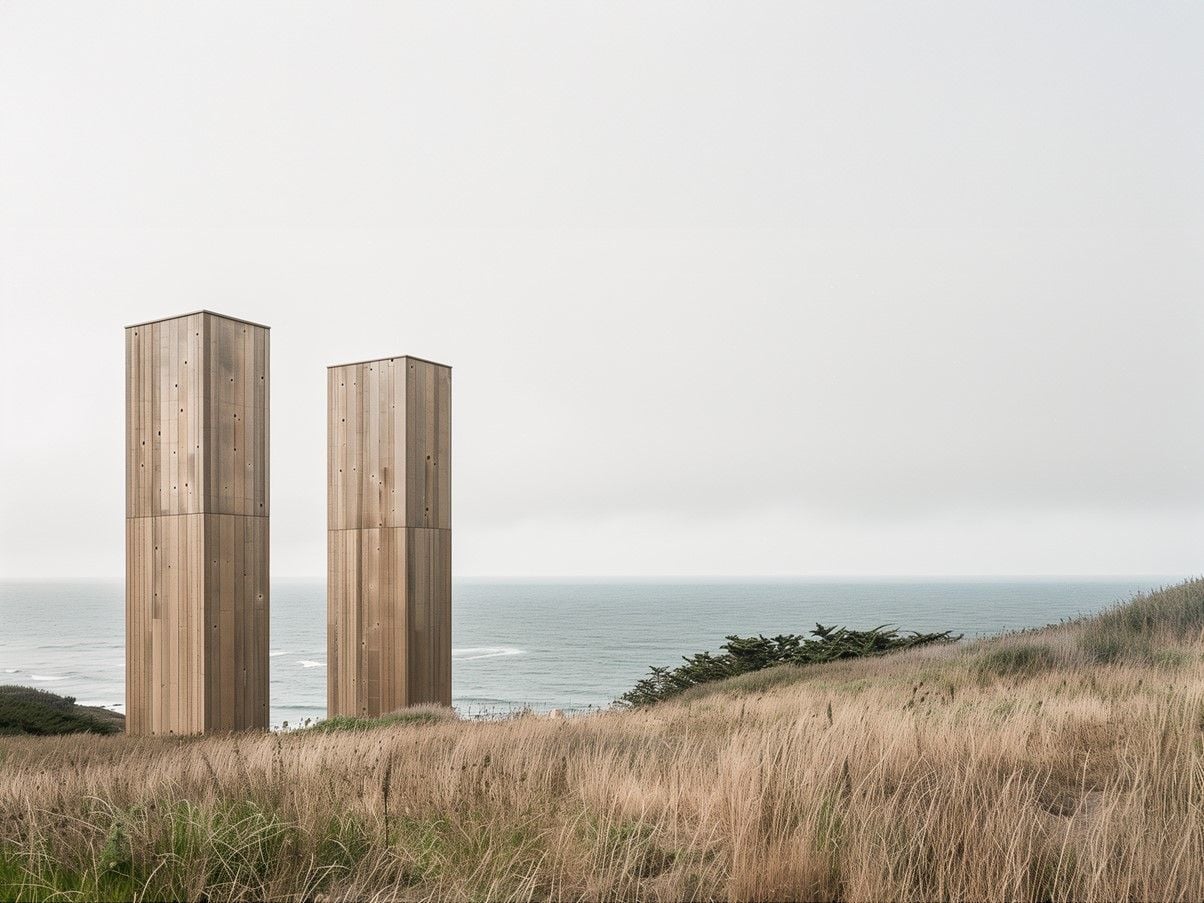
The Sea Ranch programme positions one of California’s most iconic experiments in collective living as a framework for architectural inquiry. Rather than approaching The Sea Ranch as a resolved object, the programme studies it as an active prototype: a system of forms, codes, guidelines and cultural practices that continues to organise patterns of life. Participants will work with the site as a living model, using it to understand how architecture operates as a cultural framework and how these logics might be extended, adapted or reinterpreted over time. The aim is to treat The Sea Ranch as a source of transferable intelligence that can inform broader questions of settlement, form making and design strategy.
Over ten days on site, students will work through a structured sequence of observation, research and making. Fieldwork and archival study will establish a clear reading of The Sea Ranch as a spatial system: its typologies, materials, rhythms and cultural infrastructures. These readings will drive a series of design operations explored through drawings, models, scores, short films or precise spatial studies. The course emphasises clarity of thought, contextual intelligence and spatial reasoning, combining collective inquiry with individual direction. Participants will leave with a body of work that connects form, culture and context into a coherent design position.
Tyen Masten is a London-based architectural designer, educator and founder of Tyen Masten Studio, an internationally recognised practice working at the intersection of form, culture and systems. His work explores architecture as strategic authorship, linking design, research and cultural production across scales. With previous experience at Zaha Hadid Architects and more than a decade teaching at the AA, his teaching and research examine architecture’s capacity to translate complex systems into spatial and cultural form.
The programme is open to architecture and design students, recent graduates, PhD candidates, researchers and young professionals interested in spatial practice, landscape and contemporary modes of living. Applicants from related disciplines are welcome and encouraged to apply.
Participants should bring a laptop for research and design work. Experience with Adobe Creative Suite and Rhino is recommended, along with any preferred digital modelling or rendering tools. Familiarity with QGIS is an advantage but not required. While access to Adobe and 3D software is helpful, it is not essential for participation.
A £60 non-refundable deposit is required from all applicants upon application and will be deducted from the total fees below:
The course fee includes accommodation for the full duration of the Visiting School. Travel to and from the site is not included. Group transfers from San Francisco or Oakland will be coordinated once participants are confirmed.