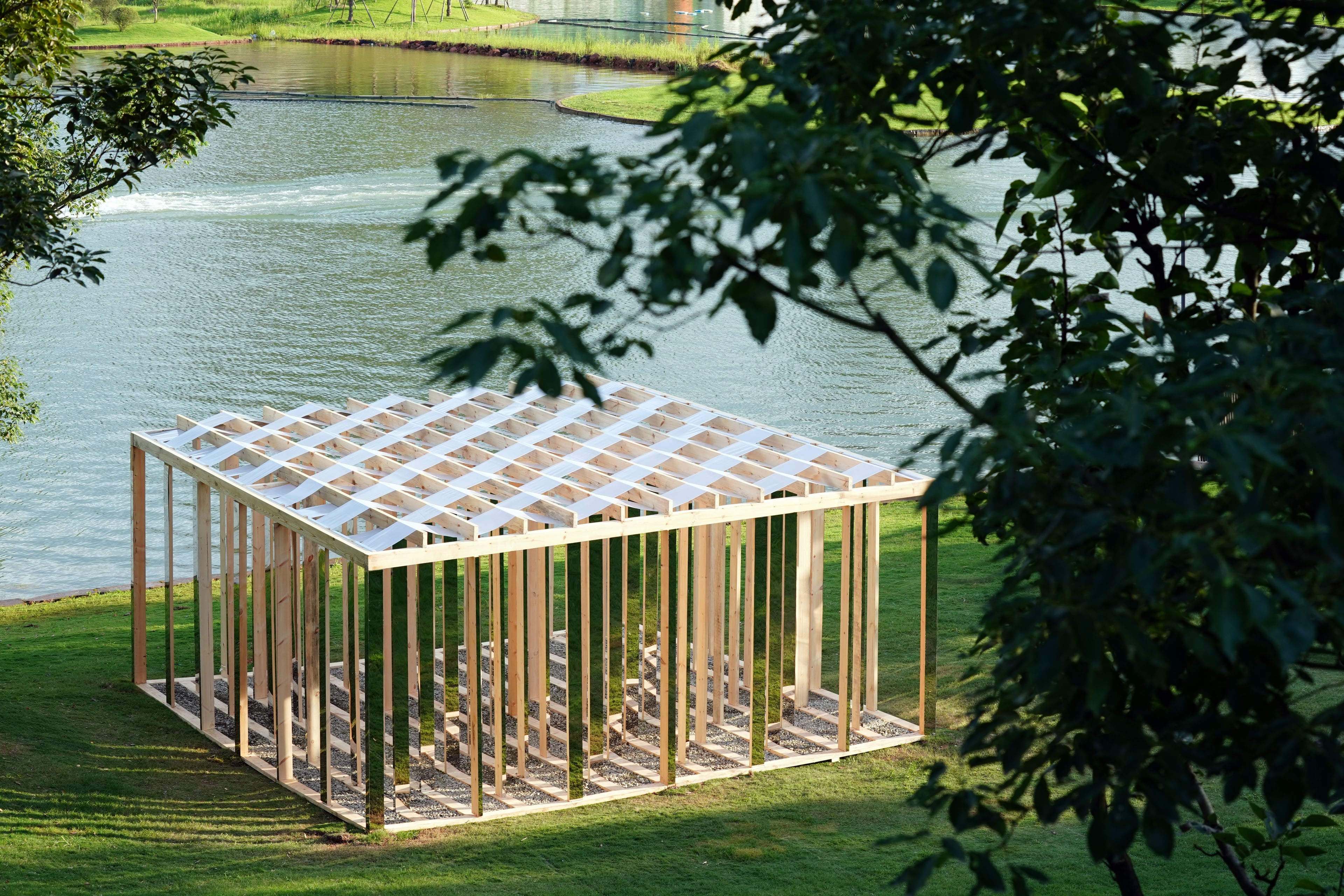
Moving into the 21st century, Chinese cities developed rapidly. These mega-cities were designed to provide their future inhabitants with a quality of life that surpassed that of most other fast-developing cities. Chengdu, founded by the Kingdom of Shu in 4th century BC, is the only major Chinese settlement to retain its name through the imperial, republic and modern eras. In 2000, the population of greater Chengdu was 10 million; today it sits at over 22 million and is the fourth most populated city in China. This development has been carefully orchestrated through the creation of 'park zones' throughout the city which provide an alternative to the urban living associated with the growth of Beijing and Shanghai. One of these park zones located in the southern suburb of Chengdu Tianfu New Area, incorporated in 2011, is called the Luhu Eco-City. The site was originally farmland, but after undergoing substantial site work, the land was transformed into a finger lake dotted with small islands connected with bridges and boats. This is a unique site which has become a wetland habitat for migrating birds.
As Luhu progresses from a suburban mixed-use enclave into an integrated part of modern Chengdu, with Tianfu New Area expected to have a population of five million inhabitants by 2030, this is the perfect time to be involved in the next stage of development of this city within a city. As part of this year’s workshop, we will look at the public life of Luhu Eco-City and question the role public spaces play within the context of the expanding periphery and residential enclaves. We will look at spaces that are intended to accommodate, or adapt to, traditional activities such as dancing, tea drinking, calligraphy and games, among others. Alongside the architects, designers, landscape architects and artists who are working with the project’s developers, we will produce a road map for the future inhabitants of Luhu Eco-City.
 Metropolitan Landscapes
 Earthbound Social Sculpture with Not Vital
 Doors, Passages and Thresholds in Tashkent
 Media-Architecture Forum
 In Other Latitudes
 Adapting the City
 Village Works
 Emerged in Seoul
 AA Architecture Incubator: Professional Masterclass Series
 Associated Things