Design and Make
Design and Make
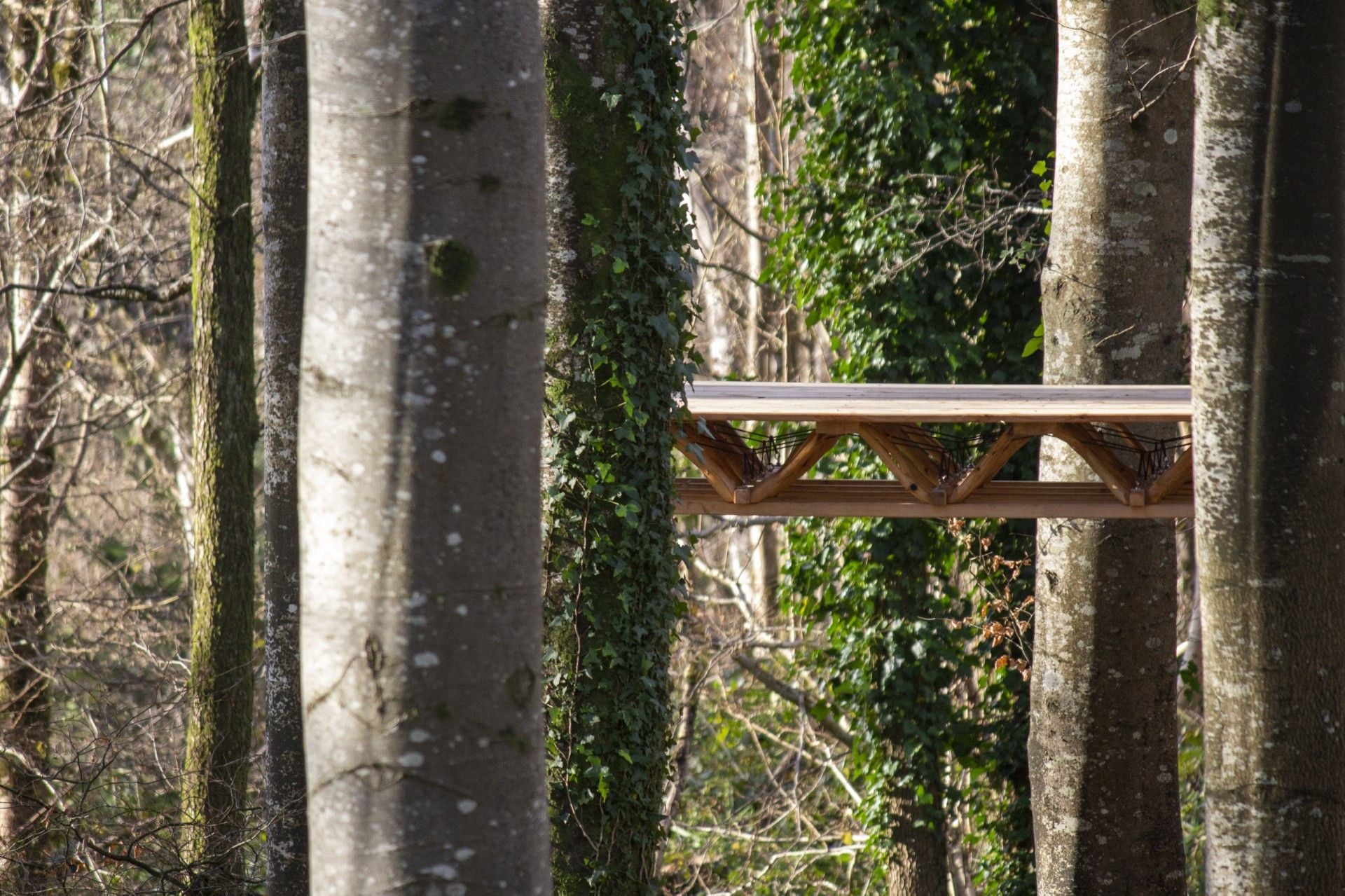 A Forest Datum, Design and Make, 2023–25.
Design and Make is based at the AA’s satellite campus at Hooke Park, a rich context which serves as an immersive laboratory for architectural research. Students study within a working forest, inhabiting a unique environment in which landscape, studio, workshop, forestry and 1:1 fabrication are interwoven. The landscape, as both material library and site, is critical to the design process and our experimental constructs are nested carefully into the tissue of the working forest.
Design and Make investigates the sustainable and innovative use of timber and other locally sourced materials to drive new forms of architectural research through 1:1 built prototypes. We materialise built work through curiosity, craft and creativity. Direct physical engagement with material, site and making processes is central to the programme and we thrive on the unexpected revelations this can bring.
The campus contains a diverse array of resources for design and fabrication. We use a hands-on approach and students are expected to spend most of their time in the workshop developing an in-depth material understanding. Technology – such as 3D scanning, modelling and CNC production – is deployed to augment traditional craft and material knowledge, with the aim of striking an agile balance between the computational and the physical.
Hooke Park is a campus in development: a continual prototype for building, unbuilding and rebuilding. Inspired by the possibilities and challenges of crafting a work of architecture that contributes to the making of this place, students build on the work of those who have come before them, adding their research to the site. This forest laboratory is a space of intense investigation, a wildwood of creativity and a home for architectural adventurers.
Programme Structure
Design and Make focuses on architectural design driven by fabrication and students are expected to situate making at the centre of their process.
The MArch and MSc programmes share taught components and are structured around a series of hands-on group projects, leading to the production of architectural prototypes. MSc students complete their project and technical dissertations over the summer for submission in September, while MArch students develop their thesis in Term 4, with their final project submission in January.
Term 1 introduces the theoretical and technical contexts, key design methodologies and fabrication practices central to the programme, setting the agenda for the year ahead. Students learn the fundamentals of timber technology, a theoretical grounding in design and make practices and are involved with hands-on making from the start to develop a core fabrication skillset. They build on this in Term 2 by working in groups on a large-scale fabrication project; then, in Term 3, they develop a focused design research project that results in a series of well-documented built prototypes and models. Term 4 focuses on the development of a project portfolio and written thesis or dissertation.
Design through Making Studio
The Design through Making Studios run throughout Terms 1 and 2 and introduce students to the unique context of Hooke Park, equipping them with the abilities required to engage confidently with the diverse set of fabrication tools and methodologies on offer. The studios are structured around group build projects within defined design parameters, where students gain familiarity with the hands-on fabrication skills and tools needed to support their research while working as team. This is supported by two courses: Fabrication Methods, a series of taught fabrication skills sessions, spanning craft technique and digital fabrication; and Design Information Digital Skills, which introduces students to software used in photogrammetry, 3D scanning, digital modelling and drawing for production, as well as approaches to filmmaking, visualisation and graphic representation which can be used for documenting and communicating process-based research. Students reflect and document making processes in their fabrication logbook: a workshop diary containing notes, sketches, photography and film which becomes a record of and companion to the work they make throughout the year. This forms part of the Term 1 and Term 2 portfolio submissions.
Towards the end of Term 2, students begin to define the focus of a design research project individually or in small groups, leading to the development of speculative prototypes and models in Terms 3 and 4. The emphasis here is on making, and we encourage rigorous testing, prototyping, experimentation, trial and error. The principle of iterative design is fundamental to the Design and Make ethos. Work is developed through prototyping and physical testing in collaboration with engineering consultants and other specialists.
Seminar Courses
Two seminar courses – Making as Design and Timber Technologies – take place in Term 1, and Force, Form, Material is held in Term 2. These courses complement the Design Studio by situating student research within a broader cultural and technical context. Together, they provide the theoretical foundation of the programme and introduce various fields of knowledge relevant to the design of experimental timber prototypes. MArch students undertake the Making as Design essay in Term 1, which functions as an early exploration of their thesis content and intellectual position. MSc students undertake the Timber Technologies essay in Term 1, which functions in the same way for their future dissertation topics and technical research.
Thesis / Dissertation
The thesis (MArch) and dissertation (MSc) provide a framework for students to develop an intellectual position through the construction of critical arguments and investigations. In Term 2, students begin to define the focus for their thesis or dissertation, which is developed through Term 3 with a dedicated write-up period in Term 4. The range of research topics within this work can encompass material behaviour, bespoke fabrication technologies and workflows, or alternative forms of design practice.