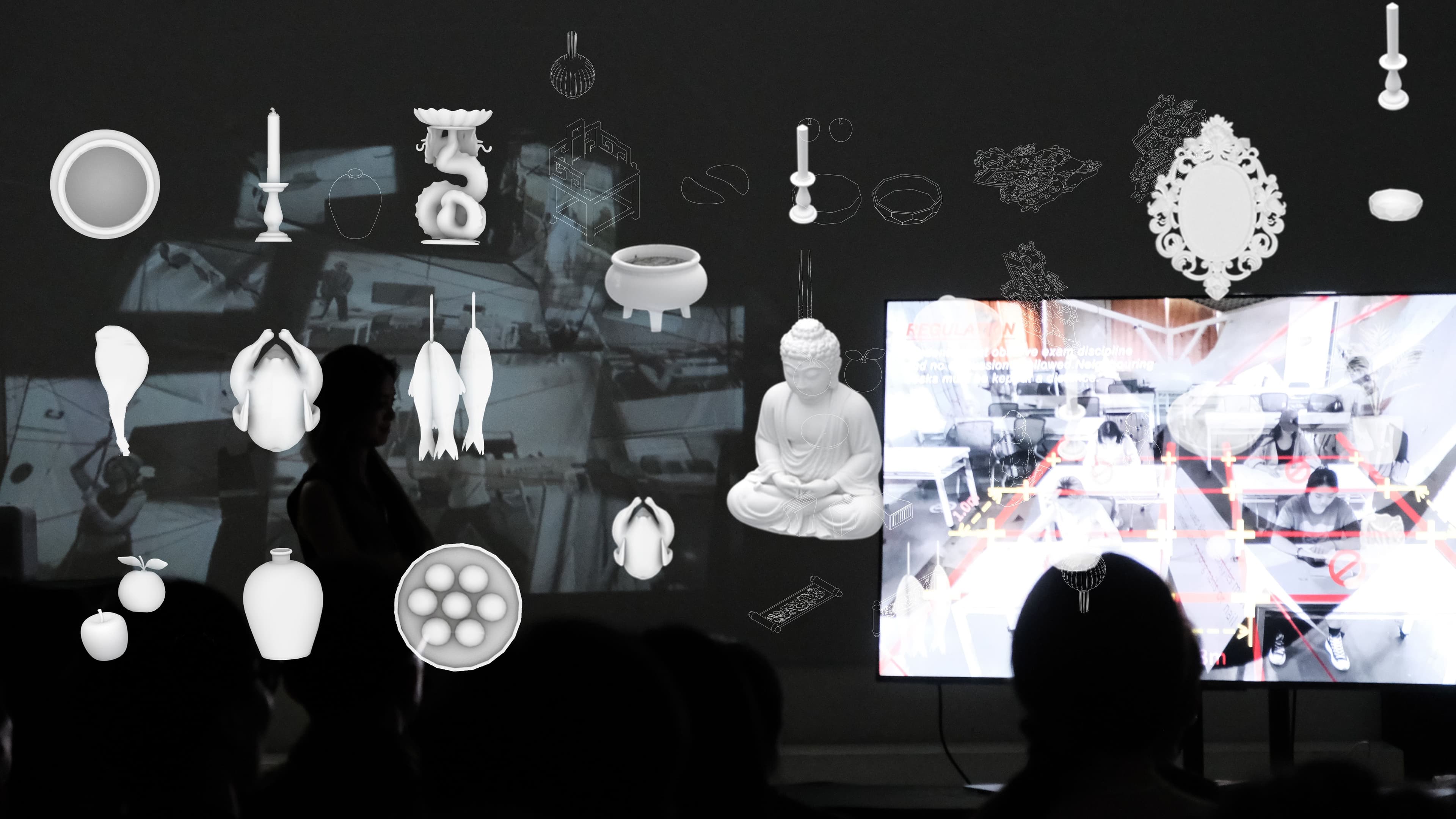
Although São Paulo is a city shaped by over 470 years of European rule, the district of Liberdade operates as a counterpoint to this legacy. From the beginning, the district has hosted non-European communities, including Indigenous groups and migrants from Africa and Asia. Successive waves of migration have layered and partially erased earlier histories, producing the dense urban fabric and vibrant street life that define Liberdade today as the city’s pan-Asian district. In response to intense pedestrian flows occupying its narrow streets and squares, the city has proposed a raised plaza and linear park with cultural institutions representing the area’s ethnological diversity. Early proposals, however, have been criticised for their monolithic and generic character.
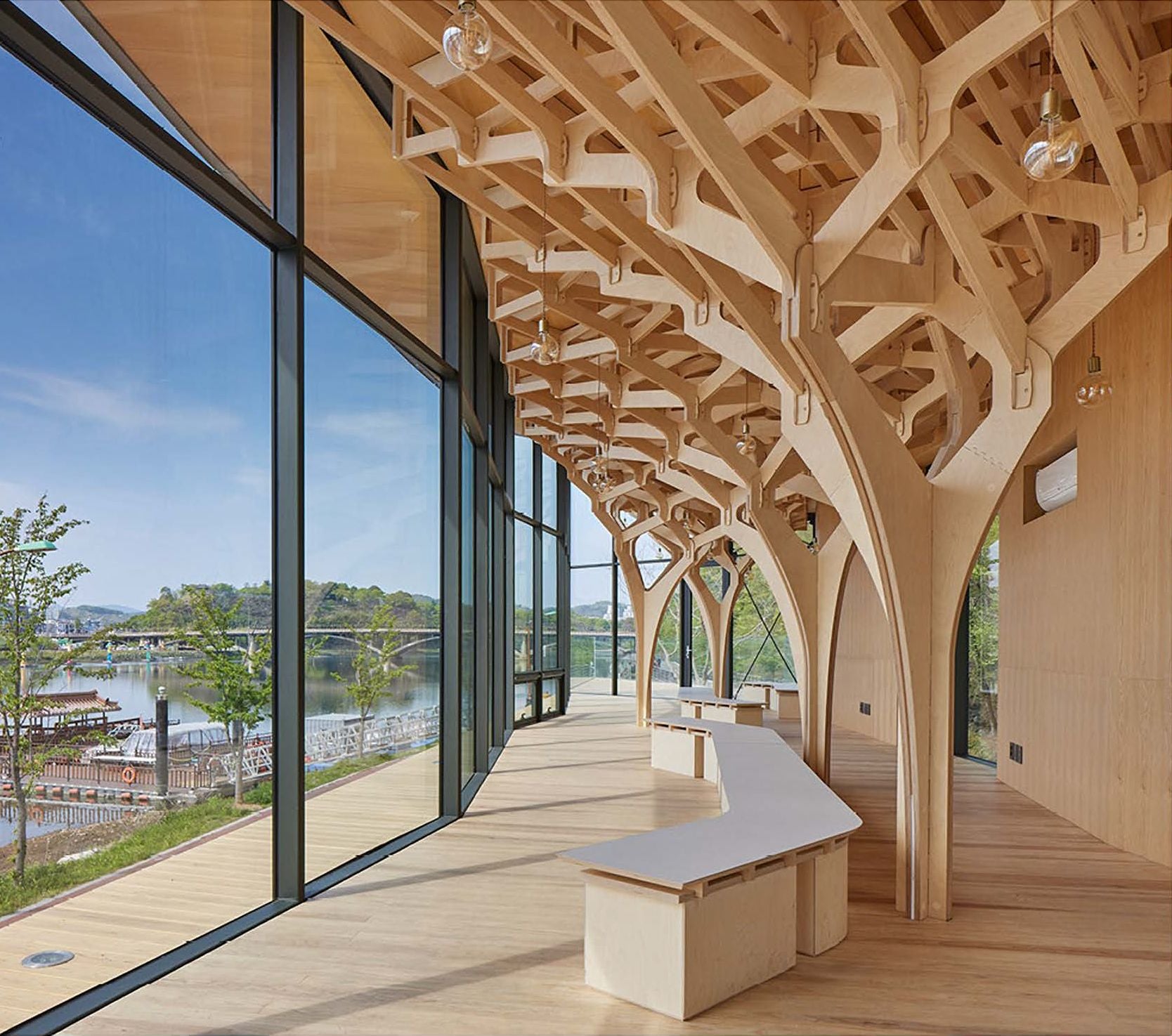
This programme instead explores spatial strategies capable of articulating multiple design traditions embedded in migrant histories through contemporary computational approaches. Led by Jae K. Kim, the workshop investigates how ancestral construction systems can inform new hybrid formations. Participants will analyse Indigenous and migrant fabrication methods, extracting structural logics to be reconfigured through parametric design in Rhino Grasshopper, including structural optimisation, and prototyped through digital fabrication. In collaboration with specialists at Mackenzie University, the programme culminates in proposals for a culturally responsive intervention for Liberdade.
Anne Save de Beaurecueil and Franklin Lee have directed the São Paolo Visiting School since 2010, organising workshops that bring international architects to rethink Brazilian cities through combining cutting-edge technology and critical theoretical exploration of local culture, material and labour sources. They are directors of SUBdV, using a mixture of high and low design technologies to generate socially and environmentally responsive geometries for architecture, furniture and urban design. They were previously Diploma Unit 2 Masters and have taught at the Pratt Institute and Columbia University, from where they both received MA degrees. They have published, exhibited and lectured worldwide.
Jae K. Kim is an architect, researcher and educator reinventing East Asian timber architecture through contemporary technology. He is an associate professor at Hanyang University and founder of JK-AR, where he integrates historical theory, structural logic and digital fabrication into a design methodology bridging tradition and innovation. He reinterprets timber tectonics as adaptable structural systems, translating craft-based principles into performative architectures where computation extends, rather than removes craftsmanship. His projects, including House of Three Trees, have received international recognition. His book Timbercraft presents research on East Asian timber architecture.
The workshop is open to students, PhD candidates, teachers and professionals in architecture, design and art. Software Requirements: Adobe Creative Suite, Rhino (SR8 or later). No previous experience needed.
Fees do not include flights or accommodation, but accommodation options can be advised. Students need to bring their own laptops, digital equipment and model making tools.
Full and partial scholarships are available for Mackenzie students. There are a limited number of places at discounted rates for current AA students. Please contact brazilvisitingschool@aaschool.ac.uk for further information.